


Spring Semester: March (main intake)
Fall Semester: September (secondary intake)
Application deadlines vary by university; early application is strongly advised.
Contact us to check which programs and intakes suit your profile and eligibility.
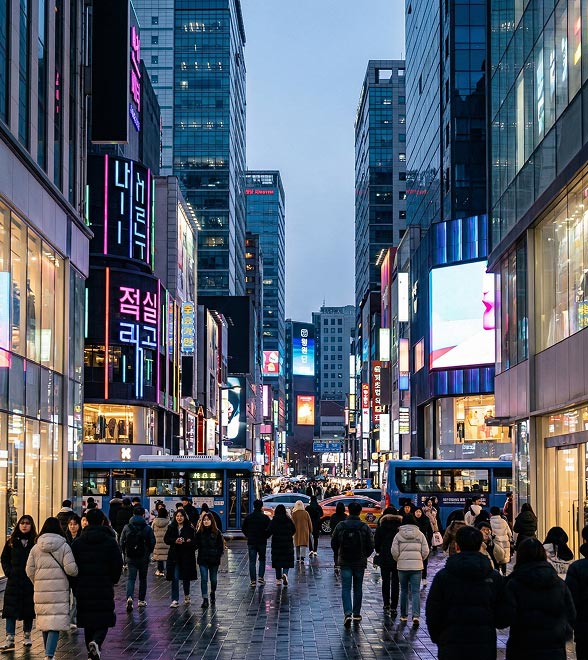
Vibrant student communities, especially in Seoul, Busan, and Daejeon , Safe, modern, and digitally advanced urban environments, Active student clubs, cultural festivals, K-pop and local experiences ,Opportunities for part-time work (20 hours/week during semester, full-time during vacations) ,Korean language skills improve daily life and employability
High-quality education with strong research opportunities
English-taught Master’s & PhD programs available
Safe and technologically advanced cities
Abundant scholarship options for top-performing students
Vibrant student community and cultural experiences
Bachelor’s programs mostly in Korean
Cost of living higher in Seoul compared to provincial cities
Limited part-time work for English speakers
Language barrier can affect social and work integration initially
Reality: Bachelor’s programs are mostly in Korean; Master’s and PhD programs are accessible in English.
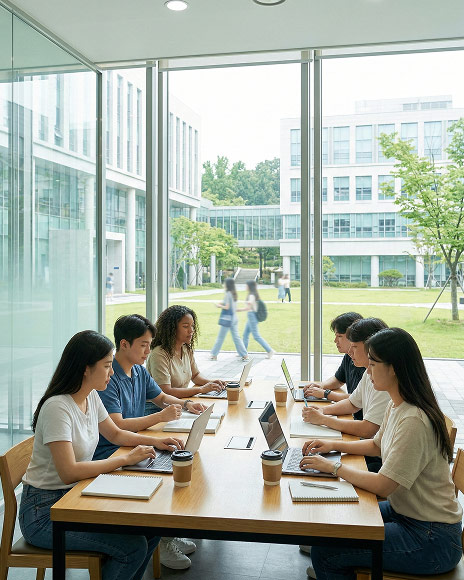
Reality: Merit-based scholarships are competitive; need-based scholarships are rare.

Reality: While Korea is modern and vibrant, day-to-day student life involves routine, study, and work; the glamorous K-Drama portrayal is exaggerated.
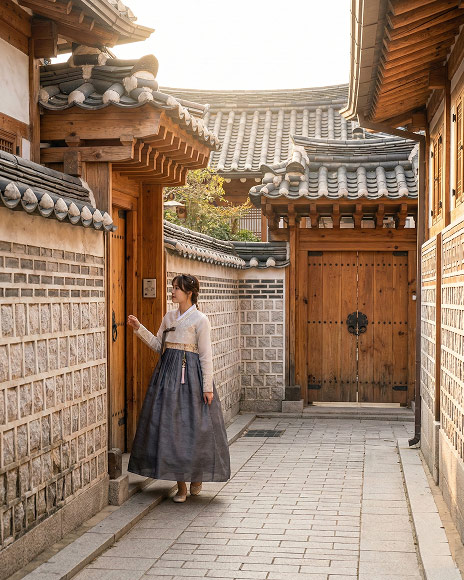
Reality: Admission does not guarantee visa. Complete documentation and proof of finances are mandatory.
We assist students with:
Selecting universities and programs matching their profile
Scholarship & financial guidance
Visa and online visa preparation
Accommodation guidance and pre-departure support
Orientation support upon arrival

Seoul International Student Fair – Mar 10–12
Busan Career & Innovation Expo – Apr 5–7
Daejeon Science & Technology Festival – Apr 15–18
Most English-taught programs require proof of English proficiency (IELTS 6.0–6.5 or TOEFL equivalent).
Yes, up to 20 hours/week during semester, full-time during official vacations.
Rejection does not cancel admission. You can reapply or request deferral; we provide full guidance.
Not mandatory for English-taught programs, but highly recommended for daily life and part- time work.
Rarely. Most are merit-based or tied to programs like KGSP.
Many PhD positions are tuition-free and salaried, especially in research-intensive universities.
English-taught programs are limited; strong academic records and relevant background improve chances.
Spring intake (March): applications open August–November Fall intake (September): applications open February–May