


Web Design Web Development
2025

Explore top universities, English-taught programs, scholarships, and the real student experience in South Korea.

Your SOUTH KOREA Journey

Degree Types & Language:
South Korea offers Bachelor’s, Master’s, and PhD programs.
Most Bachelor’s programs are in Korean, while many Master’s and PhD programs are available in English.
English-taught Bachelor’s programs are rare.
Knowledge of Korean is highly recommended for daily life, internships, and part-time work.

Semester System & Intake:

Spring Semester: March (main intake)
Fall Semester: September (secondary intake)
Application deadlines vary by university; early application is strongly advised. Contact us to check which programs and intakes suit your profile and eligibility.

Costs & Living

(01)

Tuition Fees

Bachelor’s: KRW 4,000,000 – 7,000,000/year (~€3,000–5,000)
Master’s: KRW 4,500,000 – 8,000,000/year (~€3,500–6,000)
PhD: Many fully funded or salaried positions
(02)

Scholarships:

Government: Korean Government Scholarship Program (KGSP) – full tuition, stipend, airfare, and accommodation
University-specific: Partial tuition waivers or merit-based scholarships
Most scholarships require strong academic records; need-based scholarships are rare

(03)

Accommodation:

University dormitory: KRW 300,000 – 600,000/month (~€230–460)
Private studio: KRW 500,000 – 1,000,000/month (~€380–760)
(04)

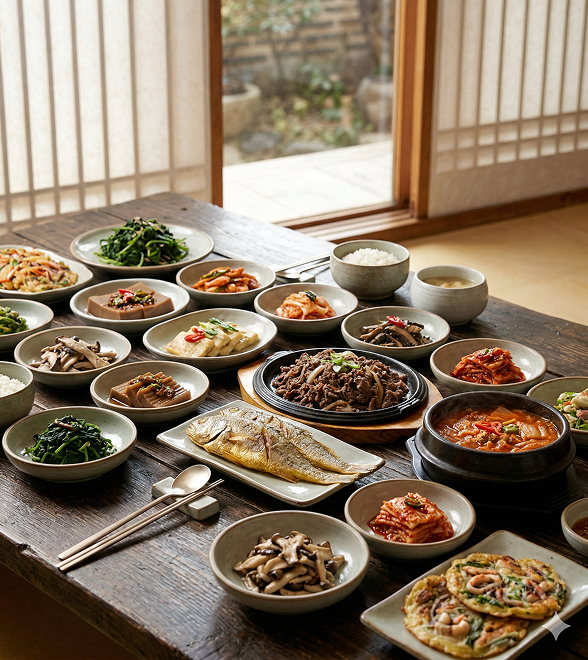
Food / Meals:

Cooking at home (3 meals/day): ~KRW 300,000/month (~€230)
University cafeteria meals (1–2 meals/day): ~KRW 120,000–200,000/month (~€90–150)
Eating out (3 meals/day): KRW 400,000–600,000/month (~€300–460)
(05)

Transport & Miscellaneous:

Student subway/bus card: ~KRW 55,000–70,000/month (~€40–50)
Books, stationery, personal expenses: ~KRW 50,000–100,000/month (~€40–75)


Visa / Residence Permit Details

D-2 Student Visa (Traditional):

Online / e-Visa Option (For Master’s Students):

Early application is highly recommended to secure both visa and accommodation.

Student Life in South Korea :

01

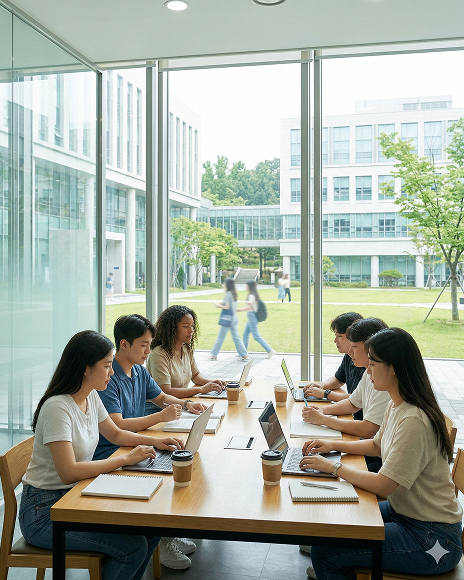
Vibrant student communities, especially in Seoul, Busan, and Daejeon
Safe, modern, and digitally advanced urban environments
Active student clubs, cultural festivals, K-pop and local experiences
Opportunities for part-time work (20 hours/week during semester, full-time during vacations)
Korean language skills improve daily life and employability

02

Pros & Cons:

A balanced overview of the key advantages and challenges.
Helps students make informed decisions with clarity.

03

Pros:

High-quality education with strong research opportunities
English-taught Master’s & PhD programs available
Safe and technologically advanced cities
Abundant scholarship options for top-performing students
Vibrant student community and cultural experiences

04

Cons:

Bachelor’s programs mostly in Korean
Cost of living higher in Seoul compared to provincial cities
Limited part-time work for English speakers
Language barrier can affect social and work integration initially

Common Misconceptions about Studying in South Korea
01.

All programs are available in English

Reality: Bachelor’s programs are mostly in Korean; Master’s and PhD programs are accessible in English.
02.

Scholarships are easy to get.l

Reality: Merit-based scholarships are competitive; need-based scholarships are rare.

03.

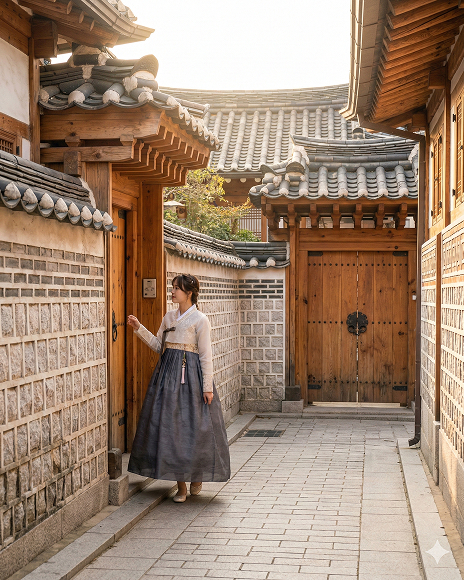
Life is like in K-Dramas

Reality: While Korea is modern and vibrant, day-to-day student life involves routine, study, and work; the glamorous K-Drama portrayal is exaggerated.
04.

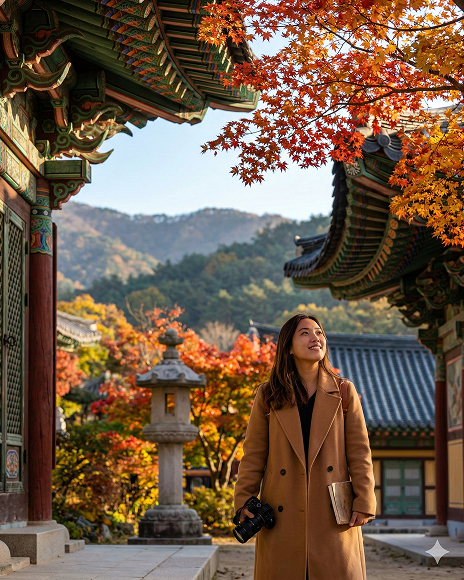
Visa is guaranteed once admitted

Reality: Admission does not guarantee visa. Complete documentation and proof of finances are mandatory.
How to Prepare Before Arrival in Italy

Top Tips for New Students:

(01)

Learn basic Korean phrases

Even a little helps with daily life, from grocery shopping to public offices.
(02)

Arrange Accommodation Early

Confirm your university dormitory or explore private housing near campus.
(03)

Prepare Financial Documents

Keep scholarship confirmation, bank statements, and visa papers ready.
(04)

Set Up Health Insurance

Required for visa and enrollment.
(05)

Plan Local Transportation

Research student transport cards or passes in your city.
(06)

Pack Smart

Include clothing for both warm summers and colder winters, plus essentials for student life.
(07)

Prepare Mentally

Moving to a new country can feel overwhelming. Initially, you may not find someone who speaks your language and might feel lonely. This is normal. Give yourself time to familiarize yourself with your surroundings, meet new people, and adapt to the local culture.

How We Can Help

We assist students with:
Selecting universities and programs matching their profile
Scholarship & financial guidance
Visa and online visa preparation
Accommodation guidance and pre-departure support
Orientation support upon arrival

Upcoming Events in South Korea

01

Updated monthly for students already in South Korea:

Seoul International Student Fair – Mar 10–12
Busan Career & Innovation Expo – Apr 5–7
Daejeon Science & Technology Festival – Apr 15–18

Frequently asked questions

Most English-taught programs require proof of English proficiency (IELTS 6.0–6.5 or TOEFL equivalent).

Yes, up to 20 hours/week during semester, full-time during official vacations.

Rejection does not cancel admission. You can reapply or request deferral; we provide full guidance.

Not mandatory for English-taught programs, but highly recommended for daily life and part- time work.

Rarely. Most are merit-based or tied to programs like KGSP.

Many PhD positions are tuition-free and salaried, especially in research-intensive universities.

English-taught programs are limited; strong academic records and relevant background improve chances.

Spring intake (March): applications open August–November Fall intake (September): applications open February–May

Copryright All rights received

2026